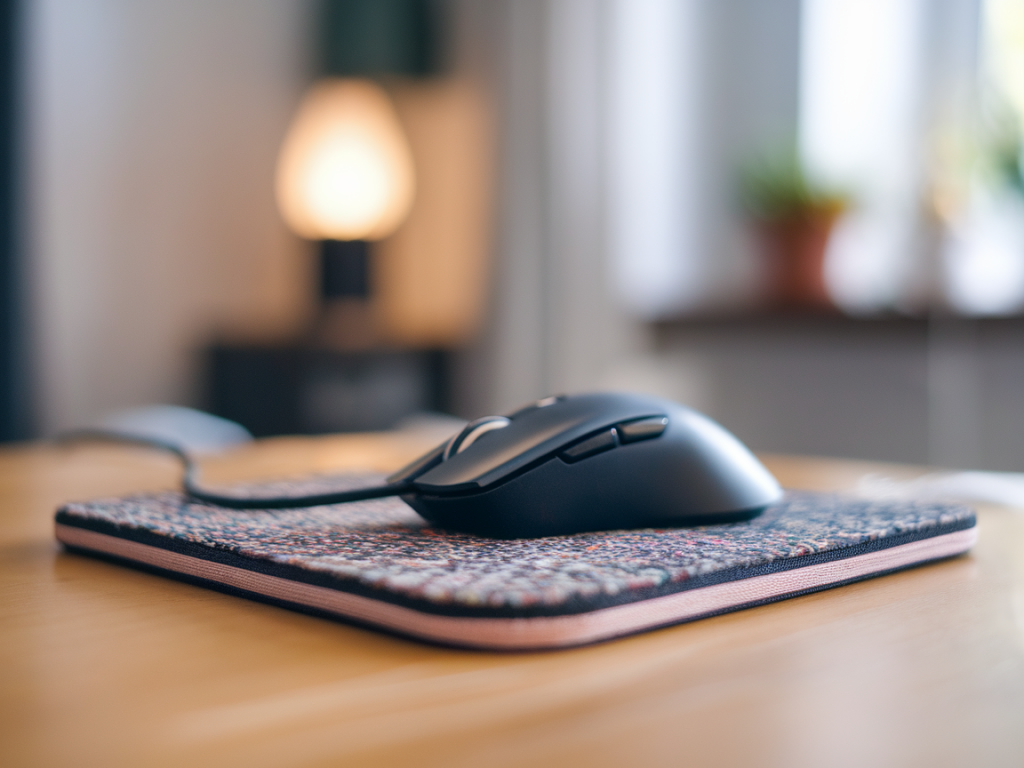
I switched to hard-glide skates on my primary mouse last year and it upended how I think about small, precise movements. If you game with a claw or fingertip grip, you already know micro-corrections — those tiny adjustments you make with your wrist and fingers to keep crosshair placement stable — are everything. The mouse pad under your hand can either amplify jitter or make those micro-corrections feel buttery-smooth. I’ve tested cloth, hybrid, and hard pads across different thicknesses and playstyles, so here’s what I’ve learned about which material and pad thickness actually help claw and fingertip players using hard-glide skates.
Why micro-corrections behave differently with hard-glide skates
Hard-glide skates (PTFE / ceramic-like feet) reduce friction and provide a very consistent glide compared to stock or softer skates. That predictability is great — but it also means there’s less natural damping from the pad. With soft cloth and worn skates, some of your tiny movements get filtered by surface drag. With hard skates on a low-friction surface, every minuscule twitch translates directly to cursor movement. That’s why the surface’s texture and stiffness matter so much for claw and fingertip grips, where the movement radius is tiny and control comes from finger finesse rather than large arm swings.
Material choices and how they affect micro-corrections
Short version: if you want to minimize unwanted micro-corrections while keeping precise control, you need a surface that offers consistent, low friction but also a touch of tactile feedback. Too smooth and you lose stopping control; too textured and you get drag and inconsistency.
- Hard plastic / polymer pads (e.g., PTFE-coated hard pads, Artisan Hien / Raiden-style surfaces): extremely consistent and low-friction. They amplify fine inputs because there’s almost no drag, which is excellent if your finger control is steady. If you're struggling with micro-jitter, these pads will expose it quickly — but they also make deliberate micro-corrections feel immediate and precise.
- Hybrid / treated cloth (speed-treated cloth, glass-coated cloth, Glorious / HyperX Fury with speed finish): these pads aim to balance glide and control. They have a smoother feel than typical cloth but retain a tiny texture bite. That micro-bite helps you arrest movement without harshly penalizing small corrections. For many fingertip/claw players, this is the sweet spot.
- Standard cloth (Qck-style): offers the most damping and friction. This is forgiving and good for smoothing out micro-jitter, but it also requires slightly more force for the same cursor movement and can feel sluggish with hard skates. If your micro-corrections are noisy (lots of small involuntary movement), cloth can mask that — but at the cost of sharpness.
- Glass / aluminum rigid surfaces: near-zero flex and very low friction. These give the most predictable sensor read and are great for consistent lift-off distance and tracking. Like hard polymer, they can highlight hand tremor; they won’t absorb anything.
Thickness matters — but not how you might think
People often equate thicker pads with more comfort and thinner pads with better control. For micro-corrections with hard skates, the interaction is about stiffness and the pad’s tendency to flex under pressure rather than pure thickness alone.
- 1–2 mm: Very thin mats (including many hard-mat options) minimize flex. That means your micro-corrections map more directly to cursor movement. Excellent for fingertip players who need immediate feedback. The downside: less wrist comfort and surface irregularities under your desk are felt more.
- 2–4 mm: The most common range for cloth pads. Provides a small amount of damping without too much flex. For claw grip players who need a balance of micro-control and slight forgiveness, this is often ideal.
- 4–6+ mm: Thicker pads add cushioning and can introduce a small "spring" or flex when you press. That flex can blur very fine corrections because the pad absorbs and releases energy. If your micro-corrections are already tiny, a thick, squishy pad can make them feel mushy. However, some players like the comfort if they have wrist issues.
My recommendations based on grip and playstyle
Here’s what I recommend after swapping pads and skates across shooters and tactical games. Assume you’re on hard-glide skates (PTFE), and you want to cleanly execute micro-corrections with a claw or fingertip grip.
- Claw grip, aggressive micro-adjustments: Go for a low-flex hybrid cloth at 2–3 mm or a thin hard surface (1–2 mm). Hybrid cloth like the Artisan Zero or a treated QcK variant gives a little resistance for stopping while keeping glide predictable.
- Fingertip grip, very small movements: Prefer thin hard mats or rigid glass/aluminum pads (1–2 mm or rigid). The immediacy and lack of flex will make deliberate micro-corrections feel crisp. Try SteelSeries Hard surfaces or glass pads if you can handle the tactile coldness.
- If you have hand tremor or noisy micro-movements: A slightly higher-friction cloth pad (3–4 mm) can act like a mechanical filter, smoothing out jitter. Look at standard QcK or Corsair MM300-type cloths.
Practical setups and testing protocol you can use
Don’t pick a pad blindly. Do a simple at-home test to see how micro-corrections feel:
- Use a sensitivity you play with normally. Warm up for a few minutes on aim trainers or in-game.
- Do small back-and-forth flicks at low amplitude — the kind of micro-corrections you use to track a head-level peek. Pay attention whether your fingers feel in control or if the pad 'delays' stopping.
- Try a stability drill: hold the crosshair on a tiny target for 20 seconds. Note if the cursor drifts more on one pad than another.
- Switch to a different thickness or material and repeat. Give your muscles ~5 minutes to adjust between pads.
Product examples I’ve tested and why they stand out
| Pad | Material / Thickness | Why it helps micro-corrections |
|---|---|---|
| Artisan Hien / Shiden | Hard-treated surfaces / ~1–2 mm options | Ultra-consistent glide; excellent for fingertip precision with hard skates. |
| Glorious 3XL Speed | Hybrid cloth / 3 mm | Balanced glide + stop; forgiving but sharp enough for small moves. |
| SteelSeries QcK Heavy | Cloth / 5 mm | High damping — smooths jitter but slightly slower feel. |
| Glass pad (e.g., Weissgloss) | Glass rigid / ~0 mm flex | Maximum consistency; shows whether finger control itself needs work. |
Other adjustments that matter more than you think
Changing pad material is powerful, but it’s part of a system. Don’t forget:
- Mouse feet quality and break-in: New PTFE can be a little grippy until they bed in. Keep them clean and consider Hyperglides-style feet for uniformity.
- Sensitivity and DPI: Very low sensitivity magnifies micro-control needs; make small DPI/sensitivity tweaks when changing pads.
- Lid-off distance (LOD): Hard surfaces often produce very reliable LOD. Check your mouse settings to prevent lift-off jitter.
- Maintenance: Keep the pad clean. Dust changes friction and can introduce micro-variability.
In short: if you’re on hard-glide skates and play claw or fingertip, aim for a firm, low-flex surface — either a thin hard pad or a 2–3 mm hybrid cloth — depending on whether you need a little deceleration bite or pure immediacy. Test systematically, and tune sensitivity to match the new feel. Once you lock in the right combo, those micro-corrections stop being noisy and start becoming your biggest strength.